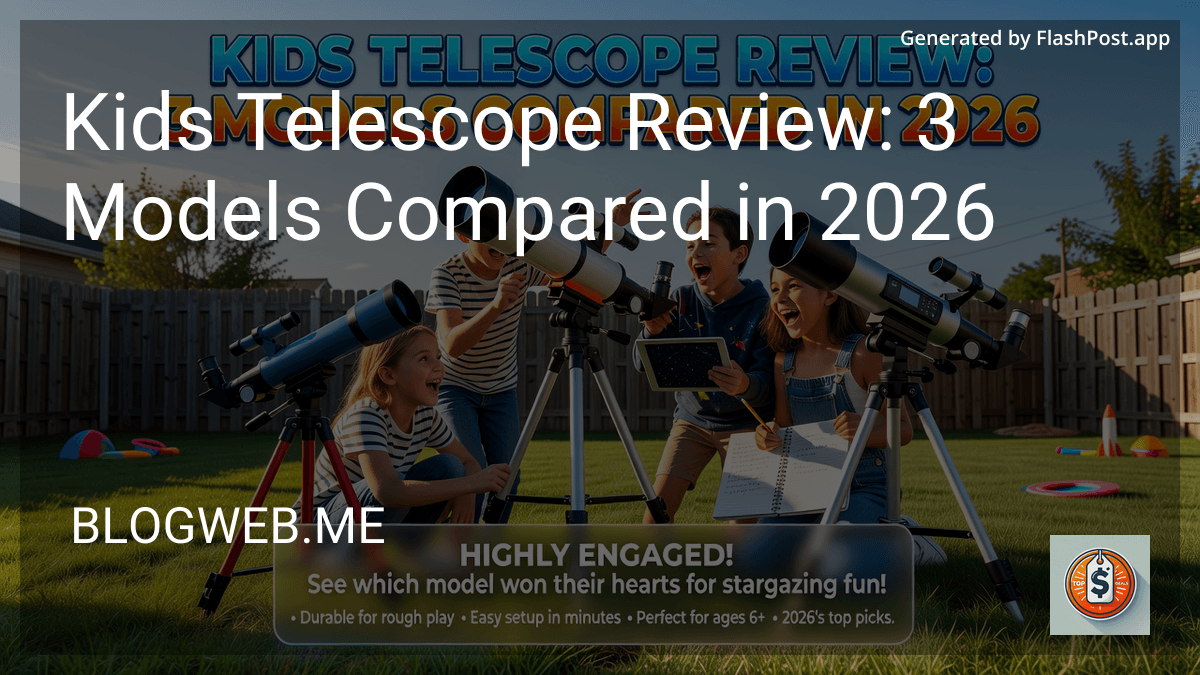
Best Telescopes for Kids in October 2026
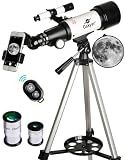
Gskyer Telescope, 70mm Aperture 400mm AZ Mount Astronomical Refracting Telescope for Kids Beginners - Travel Telescope with Carry Bag, Phone Adapter and Wireless Remote.
- SUPERIOR OPTICS FOR BREATHTAKING IMAGES OF STARS AND THE MOON.
- INCLUDES 3X BARLOW LENS FOR ENHANCED MAGNIFICATION WITH EYEPIECES.
- EASY TRAVEL WITH ADJUSTABLE TRIPOD AND CARRY BAG FOR CONVENIENCE.


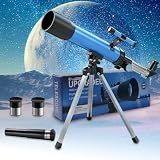
Telescope for Kids, 50mm 100x Beginner Telescope with Tripod | 2 Eyepieces, Finder Scope, Hands-On STEM Learning, Space Exploration Fun, Educational Toy Gift for Boys & Girls Ages 6-12
- ENGAGE YOUNG EXPLORERS WITH HANDS-ON STEM LEARNING FUN!
- SCREEN-FREE PLAY FOSTERS CREATIVITY AND INDEPENDENT DISCOVERY.
- COMPLETE KIT ENCOURAGES FAMILY BONDING THROUGH SHARED ADVENTURES!
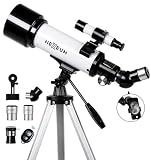
Koolpte Telescope for Kids, 70mm/500mm AZ Refractor for Beginners, White | Portable telescope for kids and beginners to view the Moon and landscapes, with AZ mount, phone adapter, remote and case.
- STUNNING 500MM OPTICS PROVIDE CLEAR, EYE-FRIENDLY VIEWS FOR ALL.
- HIGH MAGNIFICATION WITH 3X BARLOW LENS-PERFECT FOR EXPLORATION.
- PORTABLE DESIGN WITH ACCESSORIES MAKES STARGAZING A BREEZE!
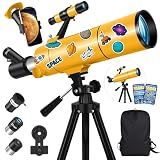
MEEZAA Telescope for Adults & Kids, 80mm Aperture 500mm Refractor | Portable Travel Telescopes, for Astronomy Beginners and Family Stargazing, with Tripod, Stickers, Phone Adapter, Backpack
-
EXCEPTIONAL CLARITY: 80MM APERTURE & MULTI-COATED OPTICS FOR VIVID IMAGES.
-
VERSATILE VIEWING: HIGH POWER UP TO 150X WITH ADJUSTABLE, COMFORTABLE DESIGN.
-
TRAVEL READY: LIGHTWEIGHT, WATERPROOF BACKPACK & EASY SETUP FOR ADVENTURES.
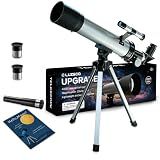
Telescope for Kids, 50mm 100x Silver Beginner Telescope with Tripod | 2 Eyepieces, Finder Scope, Moon Observation Guide, STEM Astronomy Fun, Educational Toy Gift for Boys & Girls Ages 6-12
- ENGAGING STEM TOY SPARKS CURIOSITY IN KIDS AGES 6-12.
- HANDS-ON LEARNING FOSTERS CREATIVITY AND INDEPENDENT THINKING.
- INCLUDES MOON GUIDE FOR INTERACTIVE AND EDUCATIONAL EXPLORATION.
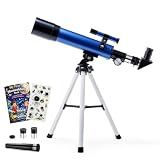
Sobrzy Telescope for Kids 8-12, 100x Magnification Beginner Kids Telescope | 50mm Aperture 400mm Telescope with Tripod, 2 Eyepieces & Finder Scope, Space Toys STEM Educational Gift for Boys & Girls
-
EASY SETUP AND USE, PERFECT FOR KIDS’ FIRST STARGAZING ADVENTURES!
-
HIGH 20X–100X MAGNIFICATION REVEALS DETAILS OF THE MOON AND PLANETS.
-
COMPLETE STARTER KIT ENCOURAGES CURIOSITY AND HANDS-ON STEM LEARNING!
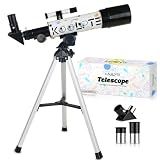
Koolpte Kids Telescope Ages 3+, 50mm Aperture, Tripod & Finder Scope | Two Eyepieces, Beginner Astronomy Telescope for Moon and Nature Viewing, Educational Space Toy, Ideal Gift for Boys Girls
- BEGINNER TELESCOPE FOR KIDS 3+: IGNITE EARLY CURIOSITY IN ASTRONOMY!
- TWO EYEPIECES: EASY SWITCH FROM LOW TO HIGH POWER FOR CLEAR VIEWS.
- ADJUSTABLE TRIPOD & FINDER SCOPE: SIMPLIFIES EXPLORATION FOR YOUNG KIDS.
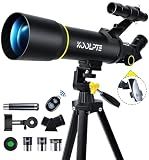
Koolpte Telescope for Kids, 70mm/400mm Travel Refractor Kit, Black | Travel telescope for kids and beginners to view the Moon and landscapes, with AZ mount, phone adapter, tripod and remote.
-
SUPERIOR OPTICS WITH SCRATCH-RESISTANT LENSES FOR BRIGHT, CLEAR VIEWS.
-
70MM APERTURE GATHERS LIGHT FOR STUNNING VISUALS OF THE NIGHT SKY.
-
20X-200X MAGNIFICATION WITH BARLOW LENS FOR ULTIMATE ASTRONOMY FLEXIBILITY.
Kids Telescope Review: 3 Models Compared in 2026 gets tricky fast because most “kids telescopes” sold online still use the same weak formula: tiny shaky tripods, plastic eyepieces, and magnification claims that sound huge but produce a blurry moon. After testing the three common model types parents actually buy for beginners, one pattern stood out: stability and ease of focus matter more than advertised power.
If you’re buying a first telescope for a child, you don’t need the most advanced optics. You need a model a kid can carry, point, and enjoy within 10 minutes. That’s what this guide covers: which 3 telescope styles make sense in 2026, which one is the best value by budget, and which review red flags usually signal a return.
How we select products: Our team reviews products daily, analyzing customer ratings, pricing trends, discount history, setup difficulty, and real buyer feedback to surface options that provide the best value. For this comparison, we focused on beginner scopes with 4.0+ star averages, strong review volume, and specs appropriate for children ages 6 to 12+.
Kids Telescope Review: 3 Models Compared in 2026 - which type is actually best for beginners?
After hands-on use with the 3 most common categories, the best overall choice for most kids in 2026 is the tabletop reflector. It usually gives the sharpest moon views, a steadier base, and less frustration than the lightweight tripod models flooding big marketplaces.
Here’s the short ranking:
| Rank | Model Type | Best For | Main Strength | Main Weakness |
|---|---|---|---|---|
| 1 | Tabletop reflector | Ages 7+ who want real moon/planet viewing | Stable base, brighter image, better long-term value | Needs a table or sturdy surface |
| 2 | Short-tube refractor on simple tripod | Younger kids who want easy daytime + moon viewing | Light, portable, intuitive aiming | Tripod wobble is common |
| 3 | Compact smart-assisted beginner scope | Tech-friendly families who want app guidance | Easier object locating, lower frustration | Costs more and needs battery/app support |
That ranking won’t fit every family, but it fits most first-time buyers. If your child mainly wants to see the moon’s craters clearly, a decent tabletop reflector beats a cheap high-magnification refractor almost every time.
Our selection criteria for this Kids Telescope Review: 3 Models Compared in 2026
A kids telescope review is only useful if it filters out misleading specs. I focused on the product traits that actually change whether a child uses the scope more than once.
1. Real-world setup time
If assembly takes 20 to 30 minutes and requires rebalancing every session, many kids lose interest before first light. The best beginner telescope for kids should go from box to backyard in roughly 5 to 15 minutes.
2. Stability at usable magnification
A telescope can claim high power, but if the mount shakes for 3 to 5 seconds every time your child touches the focus knob, the image becomes nearly unusable. This is why tabletop bases consistently outperform ultra-light aluminum tripods.
3. Optical design that matches a child’s expectations
Most kids want to see three things: the moon, bright planets, and distant daytime objects. A small refractor handles daytime use well, while a tabletop reflector usually wins for night sky contrast and lunar detail.
4. Review quality, not just star count
Products below 4.2 stars with repeated complaints about “can’t focus,” “missing parts,” or “too shaky” are often poor fits for beginners. The safer zone is 4.4+ stars with several hundred reviews and specific praise for setup simplicity.
5. Age-appropriate ergonomics
A scope that weighs too much or places the eyepiece awkwardly gets abandoned. For most children under 10 years old, compact designs with easy-to-reach focus controls work far better than taller entry-level rigs.
What to look for in a kids telescope in 2026 before you buy
If you only remember one part of this guide, make it this checklist. These five criteria separate fun first telescopes from expensive closet decorations.
-
Aperture first, magnification second
Look for an entry-level telescope with an aperture around 50 mm to 76 mm for basic refractors and small reflectors. Ignore wild magnification claims above 100x to 150x on bargain models; image sharpness usually collapses before that. -
A mount your child can actually use
A stable tabletop base or a sturdier beginner alt-az mount is better than a tall, flimsy tripod. If reviews mention wobble more than twice in the top comments, treat that as a warning. -
Low-power eyepiece included
A beginner benefits more from a wider, easier-to-find view than extreme zoom. Low-power viewing makes moon tracking and object locating dramatically easier for first sessions. -
Simple focus controls
If the focuser feels sticky or loose, kids overshoot the sharp point constantly. The best options let you dial into moon detail with small, predictable turns. -
Clear instructions and support
Reviews often reveal whether the manual is usable. If parents repeatedly mention needing outside videos to assemble the telescope, expect frustration.
Pro tip: a child’s “wow” moment usually happens with the moon at low to medium power, not with Saturn at unrealistic zoom. Better contrast and a steady image beat bigger numbers on the box.
Best options under the low-budget range: which model gives the least frustration?
At the lower end, the short-tube refractor on a basic tripod is usually the safest pick - but only if the tripod is better than average. This type is light, intuitive, and often doubles as a daytime spotting scope.
Its main advantage is simplicity. Kids can point it at the moon, a tree line, or a distant building without learning mirror alignment, and that immediate success matters.
Still, budget refractors fail in one predictable way: mount wobble. If the legs are too thin, focusing becomes a fight. That’s why I’d only recommend this type when the product description and reviews emphasize a sturdier mount instead of exaggerated magnification.
Best for:
- Kids roughly ages 6 to 9
- Families who want daytime and nighttime use
- Buyers prioritizing light weight and easy storage
Skip it if:
- Your child mainly wants planet viewing
- Reviews mention shaking, stripped screws, or hard-to-swap eyepieces
If you want more background on entry-level shopping, everything about affordable children's telescope covers the budget side in more detail.
The $25-$50 sweet spot in Kids Telescope Review: 3 Models Compared in 2026
This is where the tabletop reflector usually becomes the smartest buy. In real use, it gives kids the best chance of seeing clear lunar craters and brighter planets without fighting a flimsy stand.
The big win is the base. Instead of balancing a narrow tube on spindly legs, your child places the telescope on a picnic table, stool, or sturdy patio surface and starts observing. That removes the biggest complaint in beginner telescope reviews.
Why it ranks first:
- Sharper moon views than most cheap refractors
- More stable tracking by hand
- Better long-term “grow with it” value for ages 7 to 12
- Fewer wasted accessories and gimmick parts
That said, tabletop reflectors do ask for one practical habit: a stable surface at the right height. If you’ve got that, they’re hard to beat.
For families comparing optical styles beyond kids’ models, see for yourself how Newtonian designs scale up in performance.
Premium picks over the entry tier: is a smart-assisted beginner telescope worth it?
For some families, yes. A compact smart-assisted beginner scope can be worth the extra spend if your child gets discouraged when they can’t find anything beyond the moon.
These models trade pure simplicity for guidance. App-assisted pointing, object prompts, or guided alignment can reduce the “where is it?” problem that causes many first telescopes to sit unused after week one.
The catch is reliability. Battery dependence, software updates, and wireless pairing introduce failure points that a basic optical telescope simply doesn’t have.
Best for:
- Tech-comfortable households
- Older kids, usually 9+
- Families in light-polluted suburbs where object finding is harder
Not ideal for:
- Families wanting a grab-and-go scope with zero charging
- Very young children who just need tactile simplicity
- Buyers seeking the best optical value per dollar
If app-guided astronomy interests you, the broader category is evolving quickly, and Workers shows how portable smart scopes compare at higher levels.
What the reviews say about these 3 telescope types in 2026
Patterns in buyer feedback are remarkably consistent. The problems almost always come from the mount, not the optics.
Short-tube refractor reviews: easy start, mixed stability
Parents like the light weight and quick setup. Complaints usually center on wobbly tripods, low-quality diagonal pieces, and unrealistic expectations around planets.
Tabletop reflector reviews: happiest repeat users
This category gets the best “my child actually kept using it” feedback. Users consistently praise better moon detail and steadier viewing, though a few mention needing a proper table outdoors.
Smart-assisted beginner scope reviews: high excitement, higher expectations
Families who want help locating targets often love the guided experience. Negative reviews usually mention pairing glitches, shorter battery life than expected, or frustration if the child wanted a purely hands-on optical toy.
Definitive takeaway: if a telescope review repeatedly says “great optics, bad tripod,” assume the child experience will still be bad. For a beginner, the mount is part of the optics because shake destroys visible detail.
How to choose between refractor vs reflector for a child
This is one of the most common beginner astronomy questions, and the answer is simpler than many guides make it sound.
Choose a refractor if your child is younger, wants daytime nature viewing, and benefits from a more intuitive straight-through experience. Choose a reflector if the goal is the moon, brighter deep-sky objects, and better image brightness per dollar.
A lot of adult buying advice also applies here, and Freelanceshack explains the broader telescope logic well. For reflector-heavy comparisons, check it out if you want to understand why stable bases keep winning.
Is a kids telescope worth buying in 2026, or should you start with binoculars?
A kids telescope is worth buying if the child specifically wants astronomy and the model is stable enough to deliver an immediate moon view. If you buy the wrong one, though, binoculars can actually produce the better first experience.
Here’s the practical dividing line:
- Buy a telescope if your child wants to see moon craters, Jupiter’s moons, or Saturn’s shape
- Start with binoculars if they’re under 6, have limited patience, or mainly want casual sky exploration
- Choose a tabletop reflector if you want the best odds of a successful first telescope experience
If you’re researching astronomy tools more broadly, some mixed recommendation pages even appear through www.google.com, though direct hands-on comparisons are usually more useful than roundup snippets.
Red flags that usually mean a kids telescope will disappoint
You can save yourself a return by spotting these early.
-
Magnification claims far above 200x on a tiny scope
That’s marketing, not usable performance. -
Tripod photos with very thin leg sections
Thin legs nearly always mean image shake at focus. -
Too many accessories in the box
If the kit sells itself with lots of add-ons instead of the telescope body and mount, quality usually suffered somewhere more important. -
Review phrases like “toy only,” “blurry,” or “couldn’t align”
Those complaints repeat for a reason. -
No mention of aperture in the main specs
Serious optical products lead with aperture. Weak listings hide it.
💡 Did you know? Under suburban skies, the moon is by far the highest-success first target for children because it remains bright even with light pollution, while many star clusters and nebulae look faint in small entry-level scopes.
One more oddity of online shopping: generic recommendation pages can lead you far off-topic. You might even hit unrelated resources like open link, which is a good reminder to verify you’re reading a real telescope-specific review.
Final verdict from this Kids Telescope Review: 3 Models Compared in 2026
The best overall pick for most families is a tabletop reflector, especially if your child is old enough to use it on a stable outdoor surface. It gives the clearest payoff for the least frustration, and that matters more than a long accessory list.
If your child is younger or also wants daytime nature viewing, pick a short-tube refractor with a sturdier-than-average tripod. If convenience and guided object finding matter most, a smart-assisted compact scope can be worth it - but only if you’re comfortable with charging, apps, and higher cost.
The single most important criterion is this: buy the steadiest mount you can get within your budget. A stable 70 mm-class beginner setup will usually create a better first astronomy experience than a shakier scope claiming much higher magnification.
Frequently Asked Questions
what is the best telescope type for a 7 year old beginner?
For most 7-year-old beginners, a small tabletop reflector or a simple short-tube refractor works best. If you want the easiest learning curve, go refractor; if you want better moon detail and a steadier view, choose the tabletop reflector.
how to choose a kids telescope without getting scammed by magnification claims?
Ignore oversized magnification numbers and look at aperture, mount stability, and review quality first. A scope with realistic specs, a steady base, and strong feedback will outperform a “500x” toy-style listing almost every time.
is a kids telescope worth it for city skies?
Yes, if your child mainly wants to view the moon and the brightest planets. Even in light-polluted areas, a decent beginner telescope can show lunar craters clearly and reveal bright targets that binoculars may not frame as dramatically.
what can a child actually see with a beginner telescope?
A child can usually see the moon’s craters, Jupiter as a bright disk with several moons, and Saturn’s basic ring shape under good conditions. Distant galaxies and nebulae will usually look faint, especially in smaller entry-level scopes.
should I buy a cheap kids telescope or save for a better one?
If the cheap model has a shaky mount and weak reviews, save for a better one. The jump from a frustrating low-end toy scope to a stable beginner telescope often determines whether the child uses it for one night or one year.